Connecting the two sides of job onboarding
An onboarding platform connecting HR and new hires in one place. I mapped both sides of the experience and designed a simpler way to manage documents, tasks, signatures and onboarding progress.
- Role
- Experience Researcher, Interface Designer
- Scope
- Web app design, research
- Tools
- Figma, pen & paper
- Duration
- 1 month
An onboarding process held together by hand
The onboarding process for new hires was inefficient, requiring HR to juggle time-consuming administrative tasks with daily responsibilities. Although a system existed, it was fragmented and overly reliant on manual processes.
Delays and overload for HR. Scattered workflows and unclear tasks for new hires.
Two users, one platform
Designing for both HR professionals and new hires meant balancing two distinct sets of needs within a single platform. A seamless experience meant simplifying complex workflows without compromising essential HR functionality.
The goal was a portal where new employees could upload documents, sign contracts electronically, complete training modules and access key resources in one place, while HR teams could track submissions, monitor progress and manage records more efficiently.
What the research showed
- HR teams found the fragmented process too time-intensive.
- New hires wanted a single, accessible platform to manage their onboarding tasks.
- Both groups wanted better tracking and smoother document management.
I mapped detailed workflows for both HR and new hires, prioritized the key tasks on each side, and refined the interactions through testing.
One place for a new hire to start
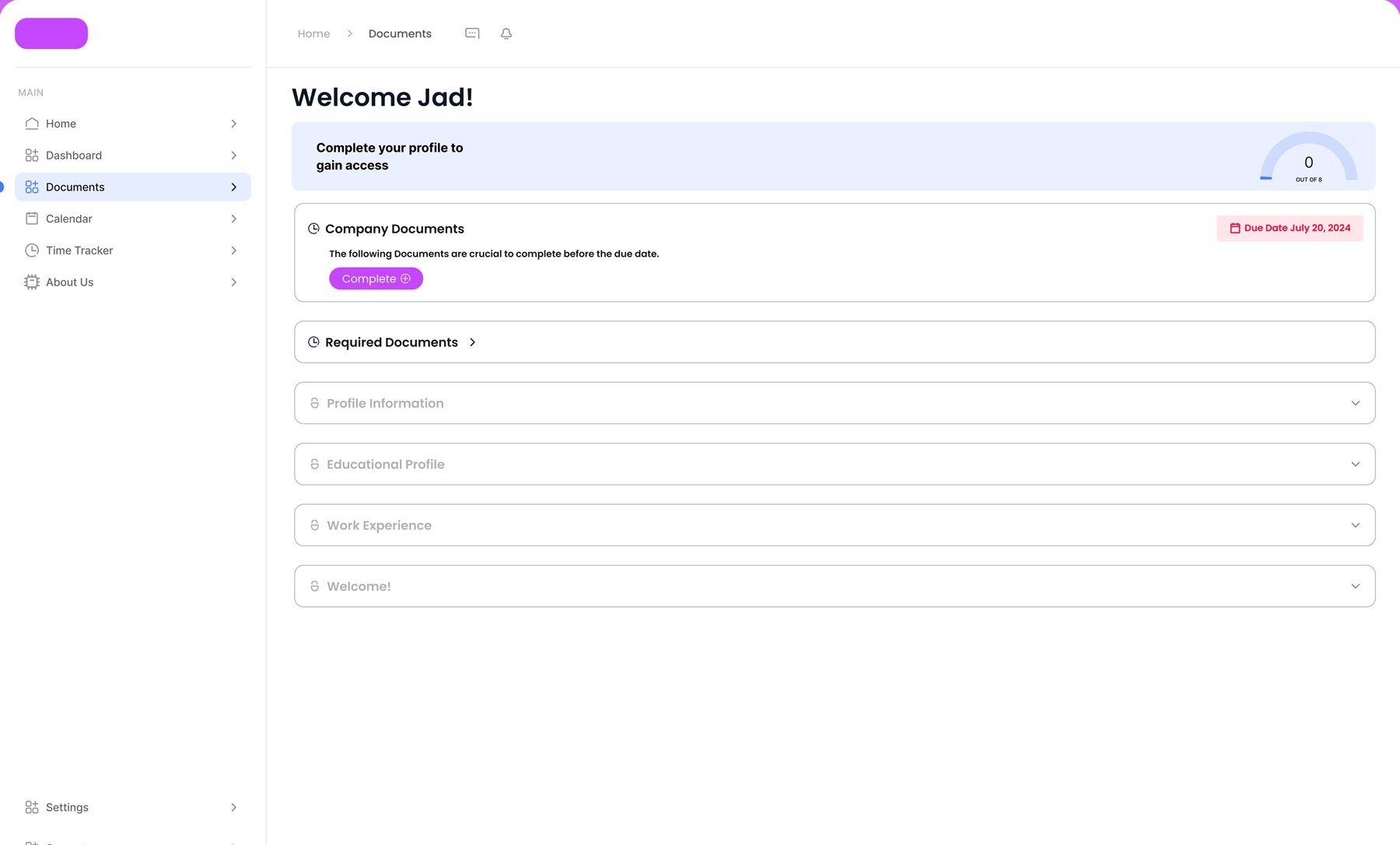
The new-hire side opens on a single page: what to complete, what is due and when. Company documents, required documents and profile sections sit in one list, so progress is visible from the first visit.
Documents upload
Simplified document submission with a notification feature for delayed items. Each document shows its own status, and a rejected upload says what went wrong next to the file it belongs to.
E-signature
Enabled new hires to electronically sign and submit documents for HR review, without leaving the portal or printing anything.
The HR side
Provided HR with a centralized view of employee profiles, document statuses and onboarding progress. From one candidate's page, HR can approve or reject each document without switching tools.
Less chasing for HR, a smoother start for new hires.
The platform streamlined the onboarding process, reducing delays, enhancing organization and improving efficiency. HR teams could focus on employee engagement, while new hires experienced a smoother integration.
The power of collaboration
Cross-functional teamwork with diverse departments emphasized the importance of clear communication and alignment.
Designing for diverse users
Mapping user journeys for multiple personas taught me how to address unique needs and create an inclusive, intuitive experience.